More megapixels doesn't mean better photographs... but in many ways, high resolution sensors can make our lives as photographers much easier, and enable us to do things we couldn't do with fewer pixels.
journal
On Fuji cameras, dials, and the lost art of consistency
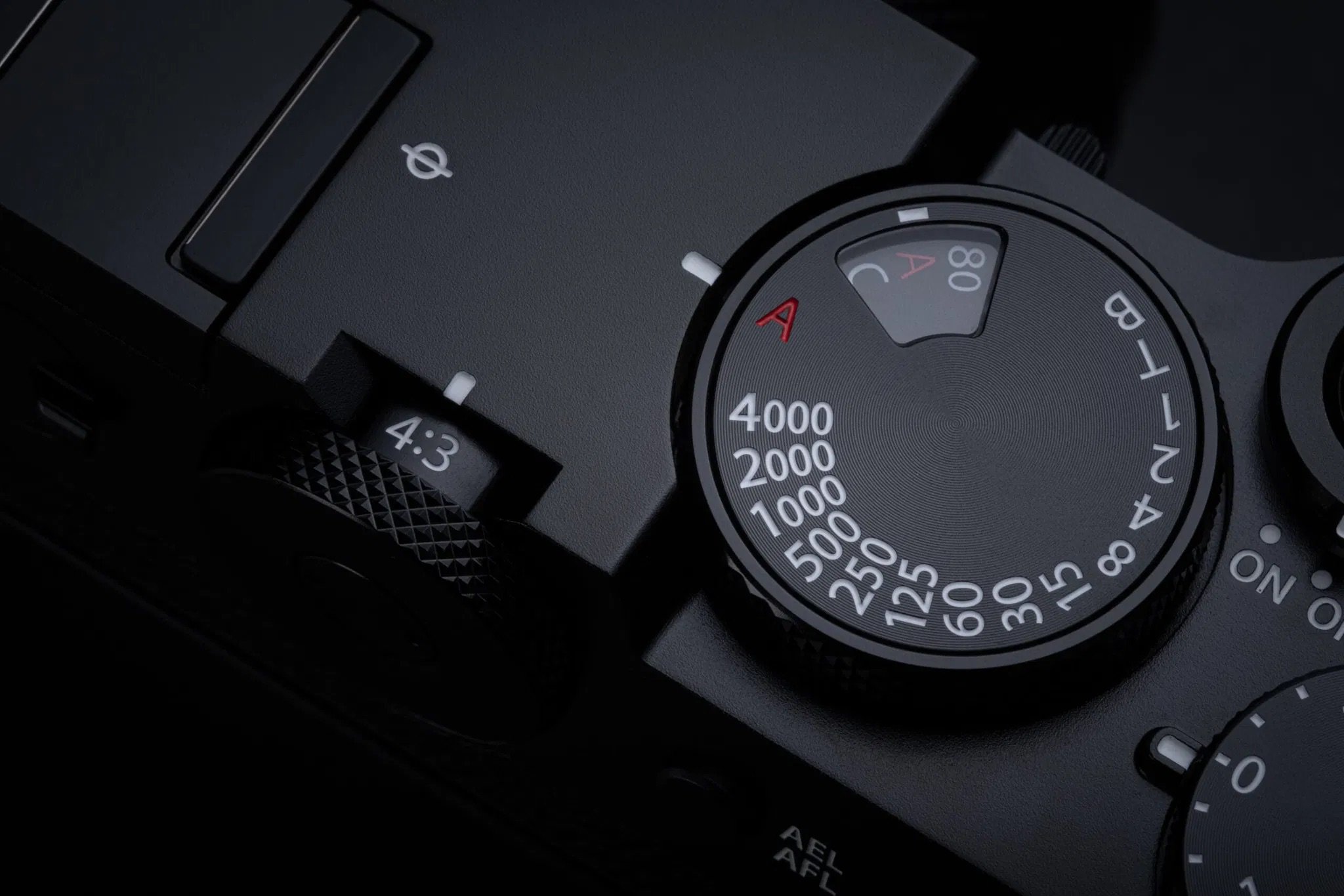
Fuji is getting a lot of attention thanks to the recently announced GFX100RF. What caught my attention from that camera wasn’t the fixed-lens, the medium format sensor, or the $5,000 price tag. It was the new “aspect ratio dial”.
This seems to be part of a new trend with Fuji cameras. Just a few months earlier, the X-T50 was the first to introduce a dedicated “film simulation dial”.
I celebrate when a manufacturer tries something new, but I can’t help but wonder what these new dials might be revealing about the times we live in.
Are photographers nowadays switching aspect ratios and film simulations so often that they need a dial for quick access?
It feels like a reflection of the modern creative mindset: constantly changing things, never sticking with something long enough to master it. There’s always a new, shiny trick that promises to change the game. Except it never does.
I’m starting to feel old-school when I advocate for consistency: the value of committing to a tool, a format, or an aesthetic for some time.
If one photo is 3:2 and color while the next is 1:1 and black and white, our work might end up feeling cluttered and directionless. It’s not just about cohesion in a portfolio, it’s about developing a personal vision.
A style doesn’t emerge from constantly switching things. It comes from working within some boundaries, constraints that force us to solve problems through creativity, instead of avoiding them.
Experimentation is good. But there’s a difference between thoughtful evolution and constant indecision. Sometimes, we just need to commit to something.
Chase what moves you
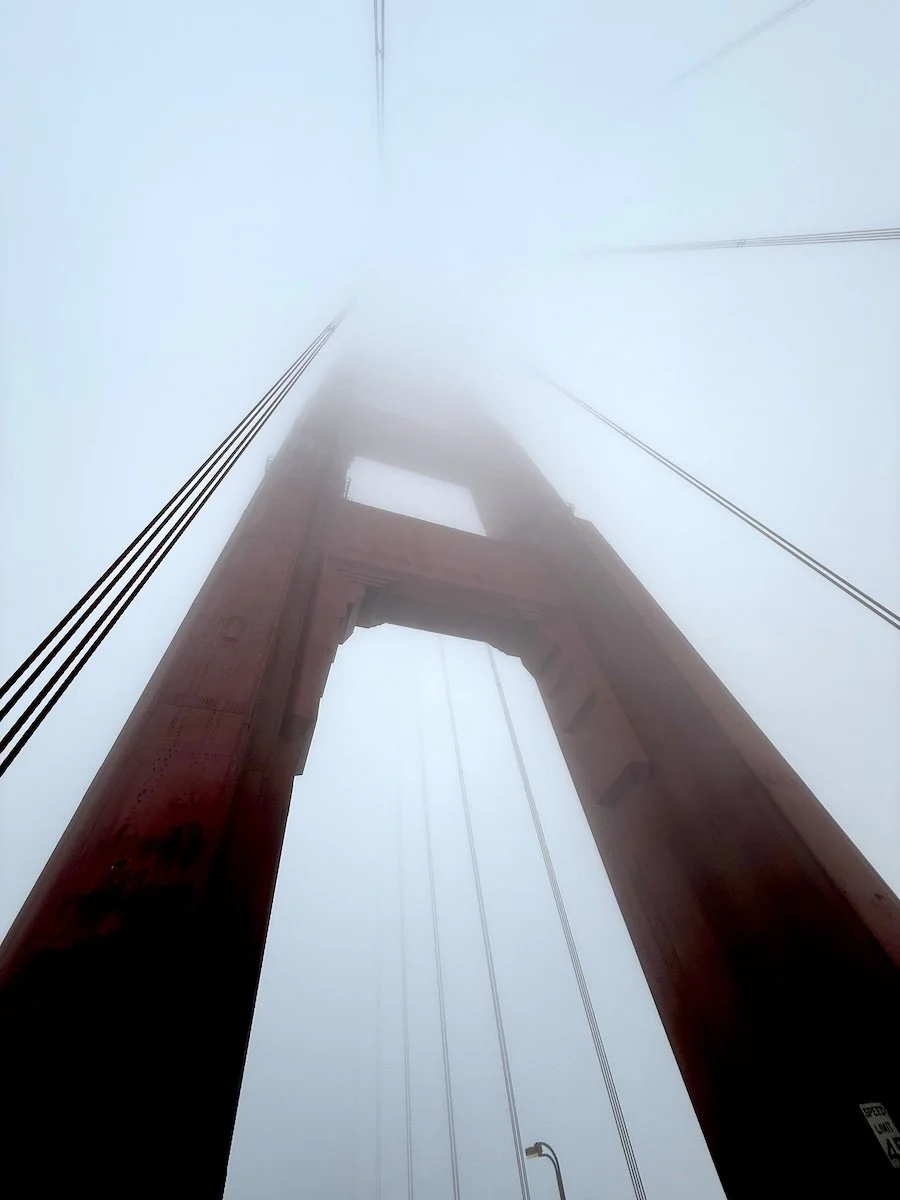
After months of absence, the fog finally returned to San Francisco last night. One of my favorite subjects in these conditions is the Golden Gate bridge, especially after sunset when the lights glow through the mist. So of course, I grabbed my camera and headed that way.
Oh, how I missed it!
The combination of fog, lights, and the low hum of fog horns echoing through the bay create an atmosphere that gives me goosebumps.
Standing there in those conditions felt similar to last week’s snowstorm in Yosemite, or to the time when Arches National Park became an otherworldly landscape, or to the fairy tale place that is Fanal in the island of Madeira. Those are the times that I live for, the ones that make photography so rewarding.
I’ve photographed the bridge in the fog many times before, and hopefully, I’ll do it many more times. These images never get much traction or attention, but that doesn’t matter: I love making them, being there makes me feel alive, and when I look at them later, the feelings rush back.
I’ll never get tired of photographing scenes that make me feel something. We have to chase what moves us.
Photography is not a recipe
I’m currently reading a photography book where the author lists their settings for every image. Normally, I’m skeptical about sharing that information, but an educational book seems like the one place where it might be justified to do so.
Many photographers seem obsessed with this kind of technical data, though. Not just the settings used but camera, lens, film stock, developing recipe, even the paper used for the final print. It’s not uncommon to see this information attached to photographs on social media; and even worse, in photo books.
The usual argument made for this is that it helps others learn how the image was made. But what do we really gain from knowing that a heavily compressed Instagram photo of a distant mountain was taken at f/7.1 and 1/250s?
If we truly want to offer insight into how an image was made, there are far more useful details we could share instead: Where and when was the image taken? Do those conditions happen often, or was it a rare occurrence? Tell me more about the story behind the shot: Why did you go there? Did you hike for hours, or did you pull over on the side of the road? If it was a hike, was it easy, or hard? What about the crowds? Seeing the original, unedited RAW file alongside the final image would also provide far more value. And most importantly: how did you feel when you were shooting your subject?
If the goal is to teach and inspire, this kind of information is infinitely more valuable than a list of settings.
Don’t get me wrong: settings matter. But most photographs could have been taken with different settings and they’d still look nearly the same. Because what truly shapes an image isn’t the aperture or shutter speed--it’s the light, the conditions, and the story told in the frame.
So why do we fixate on the settings?
I think it comes down to photography’s eternal struggle to be seen as an art. Some photographers might believe that sharing technical choices makes their work look more intentional, more serious, especially to those who don’t even know what they mean. The settings are the “secret ingredients” that the artist came up with to make the final result possible.
But photography isn’t a recipe. Greatness isn’t defined by the choice of ISO or shutter speed. A great photographer is insanely curious about the world. They notice what others overlook. They recognize beauty in front of them and know how to translate it into an image. They anticipate a moment unfolding and are ready to capture it.
You can recognize a great photographer not by what they say about their camera gear or settings, but by the passion in their eyes when they talk about their subjects.
Shoot wider than you need
Whenever I have a composition I like framed in my camera, before pressing the shutter I like to either zoom out, or take a step back.
While you can always crop in post (especially with a high-resolution camera), you can never “zoom out” after the fact.
By shooting wider than I need, I give myself room to fine-tune the framing later. Sometimes, I realize the composition needs more negative space; other times, a slight shift left/right, or up/down, makes for a stronger image.
Whenever possible, give your future self some wiggle room to experiment in post. They’ll thank you.
“It’s not ready yet” is a form of avoidance
A couple of blocks from where I live, there’s a van built for the outdoors: rugged tires, gas canisters, solar panels... the whole package. I’ve seen the interior a few times as well, and it looks extremely nice. Everything is shiny and brand new.
The van has been sitting on the street since I moved here a year ago.
I’m sure it still has things that need work, but at some point, “it’s not ready yet” becomes an excuse.
Surely, a rig like that would make my photography road trips easier and more comfortable. I can’t afford it, though, so I make it happen with a $45 mattress and a big battery. I spent three months sleeping in my car in Norway, two months in Scotland, and have taken countless trips across the U.S. with that setup. Yes, it is challenging, even miserable at times, but the inconveniences fade over time. What’s left are the memories... and the images.
When I fall into the trap of over-preparation, it’s usually in areas of my life I’m less excited about. Procrastination becomes a way to avoid doing something I don’t really want to do. It’s easy to convince myself that one more thing needs to be done before I start.
But we need to ask ourselves: do we actually want to do it, or do we just like the idea of becoming that person who does things like these?
If we spend more time shopping for hiking gear than looking at maps -and actually hiking-, maybe we don’t love this activity as much as we think. Perhaps we just like imagining ourselves as hikers.
If we spend more time reading about cameras and lenses than exploring or looking for new subjects, maybe we don’t love taking photos as much as we think. Perhaps we just like the idea of being photographers.
The best way to know what we truly want is to start. Start small, with whatever you have now. Build momentum. Buy new gear as you need it, when your current equipment is really holding you back. Only by taking action do we discover what truly drives us, rather than chasing what others say should.
It finally happened
After many tries, I finally got a winter snowstorm in Yosemite Valley. It was magical, everything I had hoped for.
What a photo book I hated taught me
I love Lee Friedlander's work, but his book "Western Landscapes" left me puzzled. I just don't like those images, and yet, there are so many things I learned from studying Friedlander's vision for the landscapes I like to photograph.
Dull weather is a blank canvas for photography
The light was pretty flat today. While most photographers would avoid days like this, I actually think they make for anything but boring photography. In fact, other than a foggy day, there’s nothing I like more than a flat, gray, and cloudy sky. These conditions give us a blank canvas to create the images we envision, rather than just capturing what’s in front of us. Especially in the context of black-and-white photography.
The power of awe inspiring landscapes: Yosemite
Since I moved to San Francisco last year, Yosemite has become one of my favorite locations to visit when the conditions are right. There was some snow in the forecast so I decided to make the trip, but ultimately I only got rain. A visit to Yosemite never disappoints though, and I got to make some beautiful images... and stand, once again, in awe in that breathtaking valley.
Shooting and developing 100 rolls of film on a road trip
Back in 2017, I went on a 2-month photography road trip across the American Southwest. At the time, I was shooting film exclusively, so I stocked up: I bought 100 rolls of medium format Ilford HP5 film, and hit the road with everything I needed to shoot, develop and scan it all on the road.
I ignored these locations for too long
There are so many spots within an hour drive from where I live now, locations I had neglected for very long. It was about time to fix it.
Originality is overrated
I believe that trying to be original for the sake of it is counterproductive, and ultimately impossible. Instead of worrying about what others have or haven’t done, we should focus on being true to ourselves and photographing subjects that resonate with us. If that’s an iconic location, so be it. If it’s something no one else has photographed before, that’s great. Perhaps it's a combination of both.
On quitting my job to become a full-time photographer
Outdoor photography gets romanticized often, but the reality can be very harsh for most of us. A dream job is still a job, after all.
In this video, I talk about why I took the step of quitting my job and becoming a full-time photographer, how to make money with photography, and some practical tips.
Websites vs Social Media for photographers
With TikTok facing a potential ban and Instagram ruining profile grids, many creators are questioning if building a presence on social media is worth the effort, given the uncertainty of the medium.
I’ve always advocated for personal websites and blogs: a platform you can truly own, free from the whims of tech billionaires. At the same time, though, I don’t shy away from sharing my work on social media.
These days, a website feels like opening a studio in a quiet, rundown part of town, while everyone is hanging out at the mall. It is flashy, lively, and all the cool kids are there. They even offer us a little corner for free, so we can speak our truths to the whole world.
That’s until the mall starts charging a fee and diverting visitors to the business placing the highest bids. Over time, you also realize that even though you got to interact with a lot of visitors, most of those interactions were fleeting. You’ve never seen those people ever again.
Yet, among the noise, meaningful connections still happen every now and then at the mall. While I’ve connected with fellow photographers through my or their websites, most of my relationships with people in this field have come through social media.
This has never been a case of the website or social media, but about embracing both the website and social media. The most beautiful, personal website is useless if no one ever visits; and your social media presence relies on whatever happens to please the owner that day of the week.
There’s no ideal solution to the problem of reaching an audience in this noisy, loud world. I believe that embracing both worlds is the best we can do.
Why I add white borders to the images I share on social media
This is an excerpt from my eBook Creative B&W Editing in Lightroom:
"If you follow me on social media, you may have noticed that I add white borders to the images I share there. The idea behind these borders is to maintain a consistent perception of the images across various platforms and viewing conditions.
I have very little control over how my images are displayed on platforms I don’t own. With the relatively recent introduction of a dark mode (night mode) on mobile devices and apps, the same photograph can now be presented against a white background during the day and a dark one at night, effectively altering the perceived tonality of the image.
By adding borders to my photographs, I can have at least some control over how the viewers will perceive the tonality, regardless of how the platform decides to present my work.
On the platforms I fully control —and that is, my website—, I publish my images without borders while still ensuring a consistent experience."
--
Sadly, Instagram is rolling out a change to the way it displays profile grids, so I might have to tweak my approach a little. But this change further proves the importance of controlling how your imagery is presented.
I believe these little details matter a lot, as they can significantly change how a photograph is perceived.
Moody photography at the California Coast
It was a wonderful rainy and moody day of photography along the California Coast. This is a ambient video, with no commentary, something I should do more often.
"Road to Seeing", by Dan Winters
I had heard nothing but praise about Dan Winters’ Road to Seeing. So I was very excited when the only copy at my local library became available.
It’s a beautifully crafted book--thick, heavy, gorgeous print, with of incredible photography, including Winters’ own work but also other renowned photographers. Anyone who bought it for the retail price of $50 when it came out definitely got their money’s worth. The book is no longer in print, and secondhand copies can sell for hundreds of dollars.
But what about that road to seeing?
I appreciate when a photographer shares their influences because it helps contextualize their work and their way of thinking. However, I feel like this takes too much space in the book, especially because it features work by well-known photographers like Henri Cartier-Bresson, W. Eugene Smith, or Robert Frank, hardly new to anyone with some knowledge of photography. The same applies to the section about the history of the medium.
The rest of the book is great, though. At times, the book reads like an autobiography, where Winters shares parts of his life at first seemingly unrelated to photography, but always connecting everything back to his growth as an artist. In my opinion, this explains much more about the photographer than a dull, boring explanation of composition and technical details.
A substantial part of the book is dedicated to his incredible portrait work. It’s always interesting to see how some of the most celebrated pictures came to be.
But my favorite sections of the book are those dedicated to his personal projects, from photographing bees to his son. They show how Winters has embraced the camera not just to create beautifully crafted portraits of celebrities, but also to document his personal life, what he was seeing at the moment, and make it all a work of art.
This is the big takeaway of the book, in my opinion. Even though there are some actionable strategies shared in these pages -photograph often, pay attention, don’t forget to live life-, Road to Seeing is not a field guide on how to make better photographs. Dan Winters shows us instead how he carved his own path, and he encourages us to do the same. That beyond the craft and all the technical considerations, the artist must be curious, persevere (even obsess), and explore.
Recommended read if you can find a copy at your local library. Otherwise, you might be able to buy an electronic version of it somewhere.
One year, three hundred and sixty five days
I’ve never been a big fan of New Year’s resolutions. I am too aware that they’re just mind tricks: whatever we’re trying to change on January 1st is just as hard to change as it was on July 23rd.
The human brain is fascinating, though, and mind tricks can work wonders. People can believe crazy things, and it’s that mindset that has propelled some of history’s greatest achievers to do what was previously impossible -- and others to fail spectacularly.
But I digress. I’m not a resolutions person. Last year, I made the mistake of writing down some goals I hoped to achieve in 2024. Some I accomplished; others I didn’t. I say mistake because looking at the “failures” didn’t exactly make my day any better.
Having specific goals can be a great motivator, but they come with risks. Many goals aren’t entirely within our control, even if they seem that way on the surface. Other goals are too shallow and miss the bigger picture.
For example, setting a goal to read a specific number of books in a year is admirable. But I think we’d all agree it’s much better to read only one book, but one that creates lasting change in your life, than to read 20 you forget within a week.
In 2025, as in previous years, I want to work more, learn more, and enjoy more. But I won’t be using any sort of yardstick to measure my success or failure when December 31st inevitably rolls around. Instead, I’m placing my trust in the power of compounding and focusing on one day at a time.
Every day, I want to either learn something new, create something, or enjoy something. These aren’t mutually exclusive. The days when I can do two, or even all three, will be the best days. How big or small those “somethings” are doesn’t matter; it all adds up in the end.
Here’s to a wonderful new year.
A foggy morning on the Golden Gate Bridge
As a big part of the country freezes, and another burns, the weather here on the central coast of California should be considered nothing short of perfect.
I miss the foggy days of summer, though. I got plenty of that magical fog for a couple of months, but I didn’t set foot on the Golden Gate Bridge during that time. I’d already photographed it in those conditions before, and I guess I wanted to explore other spots in the city. Then the fog was gone, and I regretted not visiting it at least once.
A few days ago, the fog came back for a few hours, and I immediately knew where I was going. It was magical.
There’s no shortage of beautiful places in the world, but a handful of them feel truly especial under the right conditions. The Golden Gate Bridge gave me goosebumps the first day I walked on it in thick, heavy fog, and it continues to do so every time. The foghorns, the majestic towers, the water below.
I recommend using some good noice canceling headphones, though. It gets very loud from the traffic!