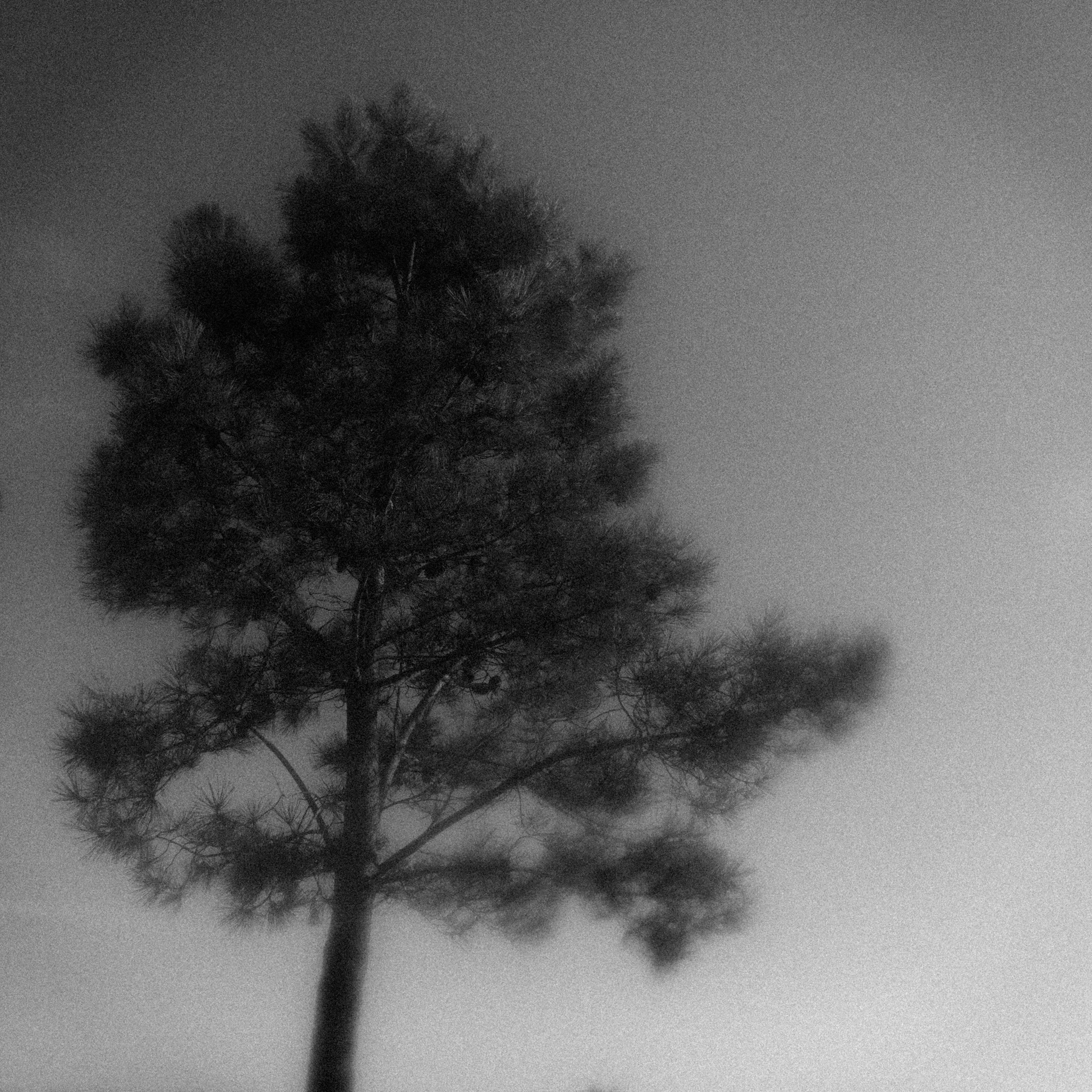
Not too much, but when you go to a location like the one I went to this morning, you have to take a few snapshots in color.
Read MoreThere's room in my heart for some color
in journal

Not too much, but when you go to a location like the one I went to this morning, you have to take a few snapshots in color.
Read More
In this new chapter of the Long Exposure Photography series, we are going to talk about what is arguably the most important thing when it comes to making good long exposure images: the subject.
While there are no strict rules in long exposure photography and the results might be unpredictable, we should be aware of a few concepts that are usually true.
After talking a bit about them, I'll be showing you plenty of examples of what you can expect to create with long exposures. These are examples from my own archive and represent only a tiny part of what can be achieved with long exposure photography.
This is, in my opinion, the most creative technique in photography, allowing you to develop your own vision and create very unique imagery.
Practice and dedication are required to get the results we want, though. If you like any of the images you see here, try to get out and create t (or something very similar) by yourself. Then, you can add your own twist to it. This is the only way to learn.
Read MoreIt's not because of the "film look" - I can achieve very similar results from a digital file.
It's not because it's cool - although this is a good bonus, who doesn't want to be cool?
It's not because it slows me down - you can be as slow as you want with your digital camera.
It's not because it costs me money, thus it makes me think twice before pressing the shutter - I do shoot more with a digital camera, but I'm merciless when it comes to delete pictures afterwards.
It's not because I like the smell of the chemicals - I do not.
It's not because I like to develop and scan my negatives - I don't mind it too much, but sometimes I wish someone else could do it for me.
No, it's not because of any of these reasons.
The one and only reason why I shoot film is because it's the only way I can shoot with my Bronica.
The experience I get while making images with that camera is unique, and there's no digital camera (under $50k) that can offer me the same.
When I shoot with the Bronica, I'm a better photographer and a better artist.
And this alone, is worth the effort and the cost.
Camera and Lens: Sony a6500, 16-70mm Carl Zeiss
Settings: ISO 400, 16mm, f/8, 1/1250sec
Walking in the countryside on a beautiful foggy morning.
This new adapter will allow photographers to use V system lenses on digital cameras like the X1D.
If anything, this will only make those lenses more expensive. There it goes my dream of shooting a Hasselblad 500C/M.
Look around you, it's going to happen.
From petroglyphs and polychrome cave paintings, to the smartphone 40,000 years later, humans have always used whatever medium they had available to capture a moment, a loved one, a thought, a story, so they didn't forget.
The more advanced the tool, the better humans could remember.
Photography is the best technique we have today, and smartphones are the culmination of almost 200 years of advances in photography.
Smartphones will also be the ones that will kill photography.
Technology is about to create a whole new world of tools to capture our lives. I'm no Nostradamus, I don't know if it will be augmented or virtual reality or holograms or something else, and I have no idea what those devices will look like.
I do know this: photography will die within the next 10 years.
The day that technology is able to capture that moment, that thought, that loved one, that story, in a way that we can relive it like we were there... in an affordable way for most of the people... that day, photography will die.
Artists have embraced all the mediums to express themselves for thousands of years, and photography will remain as an art. Like painting, sculpture or the printed word.
Moms won't be taking any more photos, though.
Look around you. It is going to happen.
“[...] to everyone who is freaking out because they fear the noise and distraction of all the additional content on the Internet, you can relax. Quality is a tremendous filter. Cream always rises, my friends, no matter how many cups of coffee you pour.”
I believe in this.
Keep posting and sharing your photography: it's the only way it can be discovered and seen by people who will love it.
Camera and Lens: Sony A7II, Sony 28-70 f/3.5-5.6 kit lens
Settings: ISO 640, 41mm, f/5.6, 1/60th
The first day we arrived, Yosemite welcomed us with a rainy and foggy day.
Our time in the park was very eventful: that same night, I woke up at 4am to get ready to shoot sunrise. I found ourselves in the middle of a snowstorm, with a foot of snow around us, and a flat (very flat) tire.
I still made it for sunrise, using the spare tire. We had to spend a day looking for a place to fix the flat, but as soon as the car was 100% again, we went back to Yosemite.
Camera and Lens: Sony A7II, Sony 28-70mm f/3.5-5.6 kit lens
Settings: 70mm, ISO 100, f/5.6, 1/800sec
I made this image on the way back from my first visit to Death Valley. I will never forget that sunset, I've never seen clouds like those forming above the Eastern Sierra Nevada that evening.
Still admiring the skies, something caught my eye on the side of the road: a lone Joshua Tree. I had to pull over and stop to take this exposure.
I pointed which at the time was still my camera, a Sony full-frame, and took the exposure. I knew I had gotten something special but for some reason I kept this image away for a while.
So many things have happened since that moment and still, it's been only a year and a half.
My mom is a collector of memories.
For years, she spent a lot of money and time putting together photo albums with side notes: where we went, what we ate, how we felt.
"1985-90", "90-93"
They are images of the highlights of our lives: that wedding, that party, that birthday, that day at the beach.
"April, 2000 - ", says the label of the very last photo album.
As you turn pages on that album, you start noticing that whereas one from the 90s would have 3-4 photos per event, this one had 10-20, getting worse and worse towards the end.
No more side notes, no more anecdotes.
And one day, suddenly, no more photos.
There wasn't room for all of them.
Digital happened.
Camera and Lens: Sony a6500, 16-70mm f/4 Carl Zeiss
Settings: 26mm, ISO 800, f/8, 1/2000th
I had tried to take some photos of this rock formation earlier that morning on my way to the peak, but the light wasn't right. The Sun was still rising behind the mountains you can see in the background.
On the way back, though, I got the right conditions.
I miss my Holga. A lot.
Today, I was out of town and had a few hours to kill. I happened to have a can of tuna in the car (don't ask) and I had an idea. A bad one.
I drove to a camera store and bought a UV filter (first time in my life, by the way).
I opened the can, and started to get some of the oil with my finger. I spread it all over the filter, and then I screwed it on the lens of my Sony a6500.
The results are promising. Not exactly a Holga look but very dreamy and surreal.
I still need to play with this a bit more, using vaseline instead of oil next time.
I'll keep you updated.
Second day at Grand Canyon National Park.
Camera: Holga 120N
Film stock: Ilford HP5+
Exposure: 800
Developer: Ilfotec HC
Rainy day at Chain O'Lakes State Park, Indiana.
When Amstrad launched its word processor 30 years ago, writers were initially resistant – processing was for peas, not words. But many soon saw the benefits of life without Tipp-Ex.
I'd bet that there are very few writers today neglecting the advantages of the backspace key.
Almost two hundreds years have passed since photography was born, and yet many still see editing as something evil.
The book is the destination. The image is the goal. The tools you use to make your art don't matter.
A few weeks ago, I went on a couple trips to the coast and I didn't record almost any footage of them. I still made a video, because I got some good images that I wanted to show you.
Camera and Lens: Sony a6500 + 16-70mm f/4 Carl Zeiss
Settings: ISO 100, 70mm, f/8, 1/2000sec
This is one of the few images I managed to create during the hike to Pena Trevinca, in the Galicia / Castille border.
I made it at the beginning of the hike, when my mind and legs were still fresh and the light workable. I had none of those two things for almost the rest of the day in the mountains.
We already know what a long exposure is and why this technique is so awesome. And we know the camera gear and equipment we need. In this week's chapter, we'll talk about how to actually use that gear to take a long exposure.
I'll show you how I take a long exposure with my Sony a6500 step by step. The controls on your camera might have a different name, but the process should be pretty similar. If you have any questions, leave a comment or contact me.
Read MoreI've grown used to destructive criticism. I've got a lot of it since I quit my job 10 months ago to pursue a career as a professional artist.
I usually dismiss it and carry on.
One day, Person A -let's call them that way- was trying to discourage me and asked a question:
"You say photography is your job... Do you work 8 hours a day then?".
They weren't looking for an answer, but to diminish what I was doing. Those are the ways of destructive criticism.
I couldn't dismiss it this time, though.
It was true: I wasn't putting the hours. I was definitely getting out and making images, but starting a photography business requires so much more than that.
From that day on, I've been working 12+ hours a day on my photography, 7 days a week.
Even though some people will try to ridicule what you do, the way you take their words is up to you. Use them to your advantage if you can; discard and forget them if you cannot.
Camera and Lens: Sony a6500 + 16-70mm f/4 Carl Zeiss
Settings: ISO 320, 17mm, f/8, 64 seconds
A few weeks ago, during a trip to A Coruña, I visited the beach of Sabon where I wanted to create an image to show the contrast between the beach and the chimney of the power station.
This place is familiar to me. Years ago, I used to work just a few hundred feet from there, and some times during lunch time I'd go to that beach to take a walk.
The idea behind this image was to make believe the viewer that they are looking at yet another image of the ocean breaking against the rocks, and realize a little bit later about the "small" detail on the top right of the frame: a chimney from a power plant.