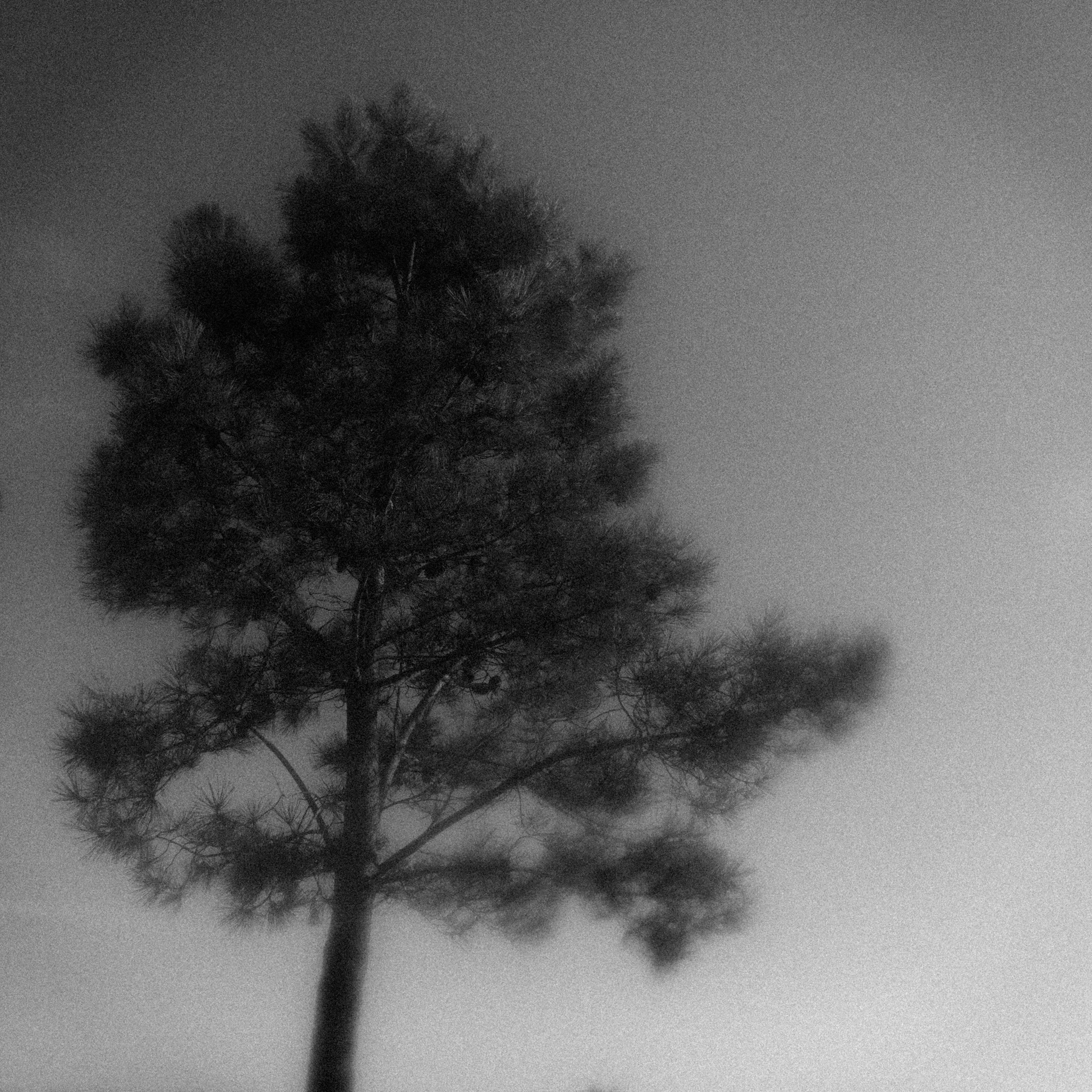
I wish the fog lasted a little bit longer these mornings, I can't get enough of it!
I captured these images during my walk yesterday.
Read Morejournal
I wish the fog lasted a little bit longer these mornings, I can't get enough of it!
I captured these images during my walk yesterday.
Read MoreI love shooting square, so of course I had to talk about this new initiative by @andrewmcclees to promote the square format.
During this month of September, @squaretember will be featuring some of the images shared with the hashtag #squaretember.
The only requirement: the photographs have to be shot natively in square format, no cropping.
Go ahead and share your square images!
First day of the month, and there's a new print for the Image of the Month series of prints.
After The Last of Winter and A New Beginning, I chose A New Day for this month of September.
Read More
Yesterday, just for fun, I ran a little experiment and shot the same compositions with both the Bronica and the Sony a6500. Then, I tried to create the same images from the negatives and RAW files and compared them.
The results? (Un)surprising!
Read More
Taking long exposures on film can be trickier than doing it with a digital camera.
Don't be afraid, though! After getting familiar with a couple of gotchas, you'll find the process pretty straightforward.
And I actually like the results much more than the ones I get with digital!
In this week's chapter of the Long Exposure Photography Series we will talk about what's different, the downsides and the advantages of using film for long exposures.
Read MoreI'm a winter person, I don't like much about the summer. The heat, the crowds, the hars light... none of them.
It's usually a bad time for me to go out and make images, so I spend most of the summer inside writing, editing and reading.
This year, I came up with 6 different photography ideas to try. From a homemade pinhole lens to use oil from a can of tuna to emulate the Holga look:
#1 Photographing the clouds
#2 Homemade pinhole lens
#3 Fireworks
#4 Night photography in a forest
#5 The Holga Look
#6 Infrared
It was fun and I learned a lot from every one of these projects. I hope at least one of them inspires you to try something different!
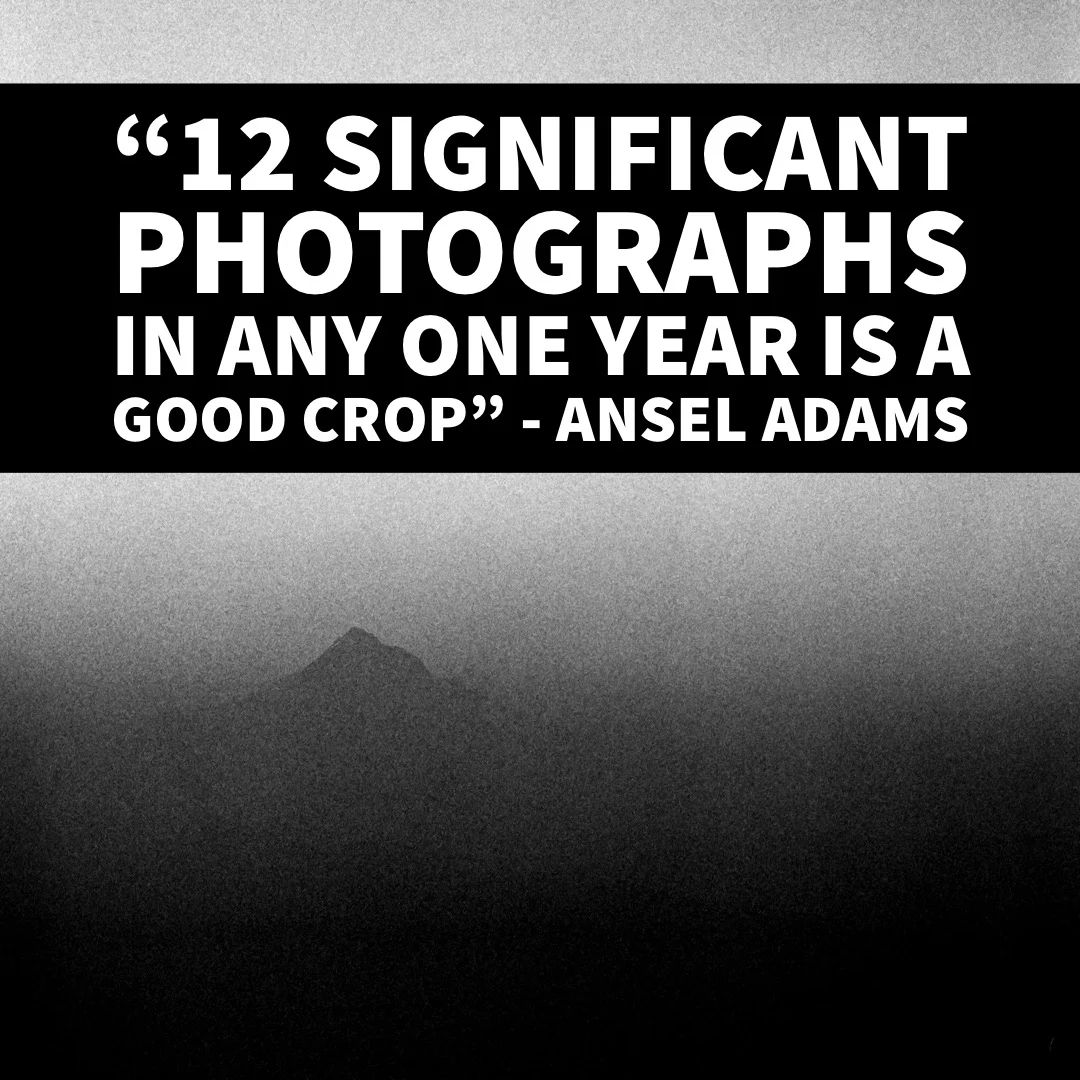
This quote by Ansel Adams is used quite often, perhaps to motivate photographers who feel they aren't making enough good images. A few images this year, a few more next year, and so on can become a significant body of work over time.
I have 2 problems with this approach, though.
Read MoreI really didn't want to wake up, it was still early and I needed the sleep if I wanted to catch the sunrise as I had planned. But the storm insisted, getting louder and the lightning more often and brighter. It was relatively close and the whole bedroom would light up.
Bye, sunrise. I got up and set up the camera. The storm moved away quickly, but before it did, I was able to get a couple of good shots.
Read MoreThe full moon is here. Last night was going to be my best chance to make a photograph of a moonlit landscape -clouds are coming for the rest of the week.
I wanted to make a long exposure of the full moon above a nearby canyon. I thought it'd be a cool image.
This place is not remote. Still, the closest town is a few kilometers away. I drove there and parked the car in the empty parking lot around 11pm. There's a viewpoint where I was planning to make this image from.
The moon was still rising above the walls of the canyon, so it was pretty dark outside. I grabbed my phone and turned on the flashlight, and opened the door.
As soon as I stepped out of the car, I heard it. It was a shot. I didn't know if it was a gun, or a shotgun, or something else. I didn't know in what direction. But it was close.
In retrospective, and having talked to some people, I believe it was a device used by locals to scare the wild boars from the vineyards that populate the landscape of the area. I'd never heard it before, but they say it sounds like a gun.
At that time, being alone in the dark in a place where I thought there was no one, it didn't feel that way.
I got out of there as fast as I could.
Probably a place I won't be visiting at night again.
Have you ever thought about what your dream camera would look like?
Mine would look something like this.
I want a mini Bronica SQ. Smaller and lighter, using a new type of film for 5x5 frames, 16 exposures per roll.
The viewfinder would stay the same, a little smaller due to the overall size reduction. You'd be able to switch to a fully electronic viewfinder (very much like the Fuji X100 series) with a live preview of the exposure and the film you have loaded in the back. This preview can simulate pushing and pulling as well.
If you run out of batteries, it should still work using the optical viewfinder.
I'd like to have just one lens, a zoom lens with a range of 20-300mm. f/4 would be more than enough.
When taking a long exposure, it should be able to show you the image as it's being "built". Of course, simulating the effect film will have on it. This way, you could stop it once it looks good and not before or after.
This would be the perfect camera for a hybrid shooter.
What would yours look like?
There are few places that feel like the Old West the way Monument Valley, Arizona, does.
We missed sunrise and sunset due to the long drive to get there from Flagstaff, but still enjoyed our time at this beautiful Indian reservation.
“Rather than shooting in colour because a subject calls for it, people tend to do so because that’s how their camera is set up. And all too often people compose their shot using the language of colour and then hope that it will translate into black and white later. Neither of these approaches work.”
Many people use monochrome to "fix" a bad photo. Others seem to have doubts about which version they prefer, so they post both: color and black and white.
While you can get good results every once in a while, this approach is wrong.
The tools you have available in black and white photography are very different from the ones you can use when shooting in color. The image should be in your mind first, then -and only then- we can choose whatever tools we need to create it.

You've spent weeks, months, or even years creating a body of work you are proud of. Now, you'd love to show it in the real world and not just online, but you have no idea how or where to start.
Hopefully this post will help you.
I just had the first exhibition of America Untitled a couple of weeks ago, and I thought I'd share how I got my work hung on walls, people to come see it, and what I've learned for the next one.
Read MoreNot too much, but when you go to a location like the one I went to this morning, you have to take a few snapshots in color.
Read More
In this new chapter of the Long Exposure Photography series, we are going to talk about what is arguably the most important thing when it comes to making good long exposure images: the subject.
While there are no strict rules in long exposure photography and the results might be unpredictable, we should be aware of a few concepts that are usually true.
After talking a bit about them, I'll be showing you plenty of examples of what you can expect to create with long exposures. These are examples from my own archive and represent only a tiny part of what can be achieved with long exposure photography.
This is, in my opinion, the most creative technique in photography, allowing you to develop your own vision and create very unique imagery.
Practice and dedication are required to get the results we want, though. If you like any of the images you see here, try to get out and create t (or something very similar) by yourself. Then, you can add your own twist to it. This is the only way to learn.
Read MoreIt's not because of the "film look" - I can achieve very similar results from a digital file.
It's not because it's cool - although this is a good bonus, who doesn't want to be cool?
It's not because it slows me down - you can be as slow as you want with your digital camera.
It's not because it costs me money, thus it makes me think twice before pressing the shutter - I do shoot more with a digital camera, but I'm merciless when it comes to delete pictures afterwards.
It's not because I like the smell of the chemicals - I do not.
It's not because I like to develop and scan my negatives - I don't mind it too much, but sometimes I wish someone else could do it for me.
No, it's not because of any of these reasons.
The one and only reason why I shoot film is because it's the only way I can shoot with my Bronica.
The experience I get while making images with that camera is unique, and there's no digital camera (under $50k) that can offer me the same.
When I shoot with the Bronica, I'm a better photographer and a better artist.
And this alone, is worth the effort and the cost.
Look around you, it's going to happen.
From petroglyphs and polychrome cave paintings, to the smartphone 40,000 years later, humans have always used whatever medium they had available to capture a moment, a loved one, a thought, a story, so they didn't forget.
The more advanced the tool, the better humans could remember.
Photography is the best technique we have today, and smartphones are the culmination of almost 200 years of advances in photography.
Smartphones will also be the ones that will kill photography.
Technology is about to create a whole new world of tools to capture our lives. I'm no Nostradamus, I don't know if it will be augmented or virtual reality or holograms or something else, and I have no idea what those devices will look like.
I do know this: photography will die within the next 10 years.
The day that technology is able to capture that moment, that thought, that loved one, that story, in a way that we can relive it like we were there... in an affordable way for most of the people... that day, photography will die.
Artists have embraced all the mediums to express themselves for thousands of years, and photography will remain as an art. Like painting, sculpture or the printed word.
Moms won't be taking any more photos, though.
Look around you. It is going to happen.
“[...] to everyone who is freaking out because they fear the noise and distraction of all the additional content on the Internet, you can relax. Quality is a tremendous filter. Cream always rises, my friends, no matter how many cups of coffee you pour.”
I believe in this.
Keep posting and sharing your photography: it's the only way it can be discovered and seen by people who will love it.
My mom is a collector of memories.
For years, she spent a lot of money and time putting together photo albums with side notes: where we went, what we ate, how we felt.
"1985-90", "90-93"
They are images of the highlights of our lives: that wedding, that party, that birthday, that day at the beach.
"April, 2000 - ", says the label of the very last photo album.
As you turn pages on that album, you start noticing that whereas one from the 90s would have 3-4 photos per event, this one had 10-20, getting worse and worse towards the end.
No more side notes, no more anecdotes.
And one day, suddenly, no more photos.
There wasn't room for all of them.
Digital happened.
I miss my Holga. A lot.
Today, I was out of town and had a few hours to kill. I happened to have a can of tuna in the car (don't ask) and I had an idea. A bad one.
I drove to a camera store and bought a UV filter (first time in my life, by the way).
I opened the can, and started to get some of the oil with my finger. I spread it all over the filter, and then I screwed it on the lens of my Sony a6500.
The results are promising. Not exactly a Holga look but very dreamy and surreal.
I still need to play with this a bit more, using vaseline instead of oil next time.
I'll keep you updated.