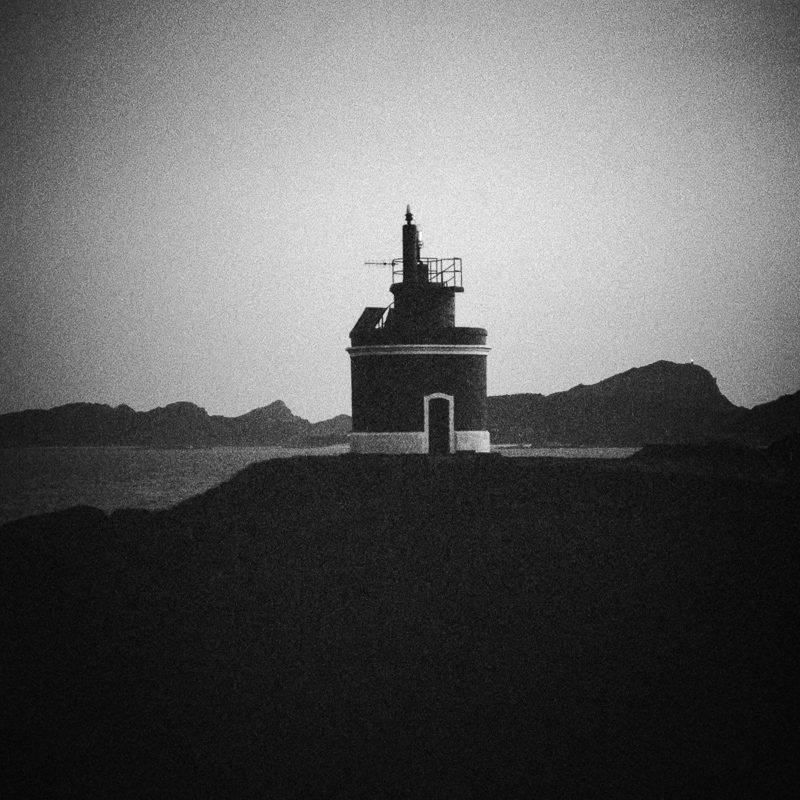
Camera and Lens: Sony a6500, 16-70mm f/4 Carl Zeiss
Settings: 16mm, ISO 100, f/7.1, 1/200sec
The beautiful setting of Cabo Ortegal.
Camera and Lens: Sony a6500, 16-70mm f/4 Carl Zeiss
Settings: 16mm, ISO 100, f/7.1, 1/200sec
The beautiful setting of Cabo Ortegal.
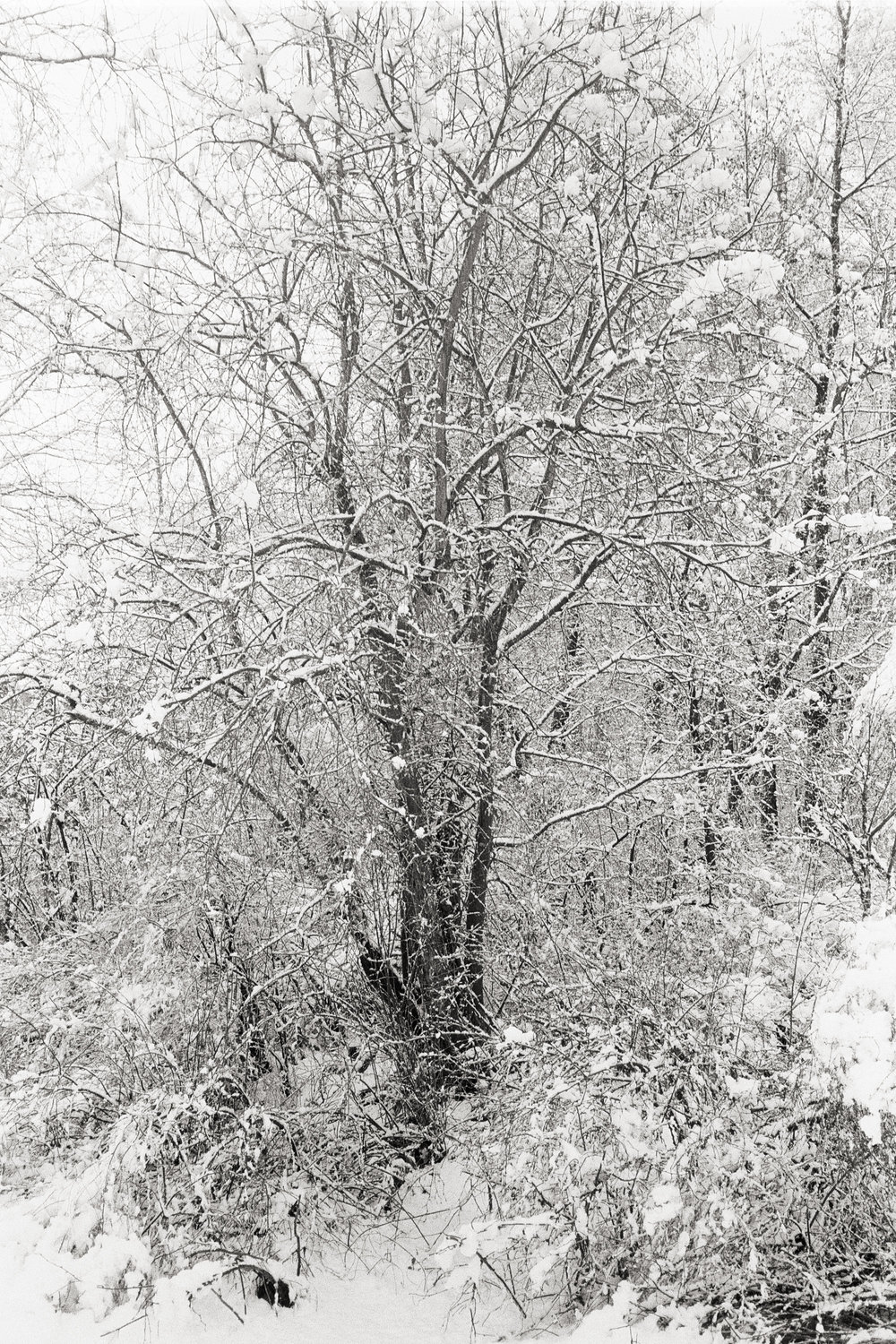
A few days ago, I went out to shoot my first roll of Rollei Retro 400S. I made long exposure images and tested the dynamic range of the film.
And then, I broke the thermometer while I was developing it. I had to guess all the temperatures and some might have been off.
The images turned out just fine, though. I will have to give it another try, this time using a proper thermometer and not my finger.

They say you don't know how good your backup system is until something bad happens. Well, that something bad happened to me a few days ago, and I regret some of the decisions I made about my backup strategy.
Don't get me wrong: I didn't lose any data. But the process to recover it is taking much more time and effort than I thought.
Read MoreCamera and Lens: Bronica SQ-Ai, Zenzanon PS 150mm f/4
Film stock: Rollei Retro 400S
Exposure: 400
Developer: Ilfotec HC
Notes: my thermometer broke so I had to guess the temperature of the chemicals.
This was my second trip with the new car, and what a beautiful and lovely morning it was!
I shot an entire roll of Rollei Retro 400S, and got some good images.
I wasn't expecting this one to come out as well as it did, because of the huge dynamic range of the scene.
There's a bit of pure white, but that's the Sun rising behind that fog. I was sure much more of the highlights was going to be blown out.
In this week's chapter about Long Exposure Photography (the last one!), we'll talk about a few things that we have left and were hard to fit in previous posts.
Read MoreIn this video, I try long (really long) exposures with my Sony a6500, my first time doing this with a digital camera.
While film has reciprocity failure, digital has its own set of problems when it comes to long exposure photography.
In the end, though, I was satisfied with the results!
This is the first chapter of a new weekly series called *Artist Interviews*, where I interview a photographer with a body of work I admire.
Brendon is a photographer I've been following for quite a while on Instagram. He's got quite an impressive collection of images from the forests of the PNW, making photographing trees look easy (it's not!).
All the images in this post were made by Brendon Holt.
Read MoreThe series American Road Trip is coming to an end: only 2 more episodes left!
This time we visit Zion National Park, in SW Utah.
I spent a few days in the area but I was only able to visit the park a couple times, due to a snowstorm that covered it with ice and snow. This ruined my plans of hiking to Angel's Landing, but gave me some more unique images in exchange.
I've had this blog for a while, and I feel like I haven't written much about what drives and inspires my photography.
If I had to choose one, and just one photographer, that'd be Michael Kenna without a doubt. I am a fanboy, I own several of his books and absolutely love his photography.
But if I had to choose one, and just one image, it wouldn't be one of his.
Bill Brandt, Lord MacDonald's Forest, Skye, 1947
I saw this image made by Bill Brandt (Isle of Skye, 1947) for the first time a couple of years ago.
There was something about it.
This image moves me so much, more today than it did two years ago. It's really hard to write this post because I can't really explain it.
The composition, the choice of a vertical format, how he removed all details from the landscape (but the cabin on the bottom right), the long exposure, the mystery... yes, I think it is the mystery.
This image inspires me every time I look at it. This is what I aim for when I go out with my camera: to create something that moves someone in the same way Bill Brandt has moved me with this image.
What about you? If you had to choose one image, which one would it be?

Of course, my first trip with the new car was to the mountains.
I didn't post anything on the blog yesterday. I think it was the first day that went by without new content in months!
There was a good reason, though: after waiting for 4 months, the new car is finally here!
This means that our time here in Galicia is about to end, as we'll start traveling as soon as this Sunday. Galicia will remain as our base camp, headquarters, whatever you want to call it, but we'll be on the move most of the time.
More trips means many new images and videos coming.
Film images will take a bit longer, though. I'm not planning on bringing the "darkroom" with me like I did in America, instead I'll develop all the rolls once I'm back at HQ.
Traveling also means I'll have less time to spend in front of the computer -the end of the summer will help with this as well- thus I will have to organize in a different way to keep the content coming, here and elsewhere.
Where will we be going, you ask?
That's a good question. The answer is... not sure, yet.
I like to change plans a lot, so take this with a grain of salt, but as of right now: in the next few months and until next summer we'll be visiting and spending quite some time (one to three months in each place) in Portugal, France, the UK and the US.
Can't wait!
I don't usually try new film stocks, I like the results my Ilford HP5+ pushed to 800 delivers.
I've been more interested in trying new things as of lately, though. After working on a few fun photography projects this summer, including infrared photography, I'm finally shooting different emulsions to see what I can create with them.
The first one, Ilford Delta 3200.
Read MoreIf you make photographs for yourself and have zero interest in sharing your work with anyone, then skip this post.
If you are already sharing your work online, then skip this post.
For everyone else: you better start sharing your images online if you have any interest in doing something with your photography.
We can hate Instagram and Facebook as much as we want, but that won't change the facts: people spend a big part of their days online, on IG, FB, Twitter and the rest of the social media family. Yes, even LinkedIn.
Are you at a public place now? Look around. Not only are most people on their phones, you are too.
Want your photography to be seen? Stop waiting for people to get to you, you have to go to them.
It's 2018, after all.
Eduardo Pavez runs a great channel about film photography on YouTube. In his latest video he tries Cinestill Df96, a monobath solution that promises to make developing -black and white film- much easier.
Instead of dealing with multiple chemicals (developer, stop bath, fixer...), this solution does it all. Pour it in the tank and after 3 minutes your negatives will be ready to wash.
I can't wait to try it myself -I don't know of any place here in Europe that carries Df96 just yet.
I can see one gotcha with this new product: achieving the right temperature. The trick is to get the solution to the temperature indicated for your film stock and exposure.
If you've developed film before, you know that getting any solution to the right temperature can be the most challenging part of all! Surely, one of the most time consuming steps.
I have to hold off on giving my final opinion on this new monobath solution until I try it, but it looks like the savings in time from using just one chemical can be erased trying to get the solution to the right temperature.
I wish the fog lasted a little bit longer these mornings, I can't get enough of it!
I captured these images during my walk yesterday.
Read MoreI love shooting square, so of course I had to talk about this new initiative by @andrewmcclees to promote the square format.
During this month of September, @squaretember will be featuring some of the images shared with the hashtag #squaretember.
The only requirement: the photographs have to be shot natively in square format, no cropping.
Go ahead and share your square images!
First day of the month, and there's a new print for the Image of the Month series of prints.
After The Last of Winter and A New Beginning, I chose A New Day for this month of September.
Read MoreCamera and Lens: Sony a6500, 16-70mm f/4 Carl Zeiss
Settings: 51mm, ISO 100, f/7.1, 1/500sec
On way back from my failed trip to Lugo (that became a Medium Format vs APS-C experiment), I saw some low clouds on the mountains and decided to take a little detour.
I love driving these roads, you never know what you can find. There are so many of them!
This time was no different. I stumbled upon a few cool trees, and then I saw this one. I had never seen one like this around here. It looked like a super-sized bonsai.
I had to capture it, of course.

Yesterday, just for fun, I ran a little experiment and shot the same compositions with both the Bronica and the Sony a6500. Then, I tried to create the same images from the negatives and RAW files and compared them.
The results? (Un)surprising!
Read MoreCamera and Lens: Sony a6000, Meike 35mm f/1.7
Settings: ISO 100, 1/125sec, aperture unknown
Even though we had to call this boat ride short because everyone was cold, I loved that time on the lake that foggy evening.
Calm waters, no one around but a handful of fishermen... so relaxing and beautiful.

Taking long exposures on film can be trickier than doing it with a digital camera.
Don't be afraid, though! After getting familiar with a couple of gotchas, you'll find the process pretty straightforward.
And I actually like the results much more than the ones I get with digital!
In this week's chapter of the Long Exposure Photography Series we will talk about what's different, the downsides and the advantages of using film for long exposures.
Read More